The Common Tailor Bird
Most of the following text and images are taken from our YouTube video
There’s more wildlife in the city than you might think, if you just look.
The southwest monsoon is here in Malaysia and its very hot. So when rain comes it's welcome, even if it’s a quick light drizzle. I sit outside enjoying the cool relief it brings when I spot it. A tiny bird on a branch in my Eugenia tree. He has rust-colored feathers on its forehead, crown and around the eyes. The rufous color contrasts strongly with the rest of its body- olive-green on the back and creamy-white on the underparts.
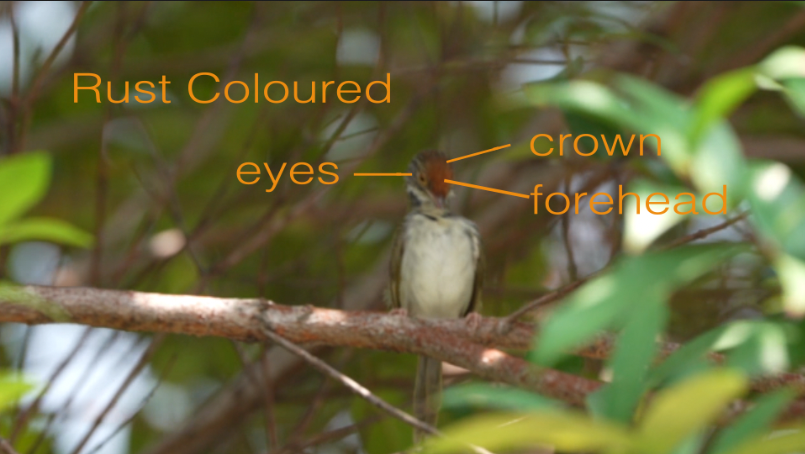
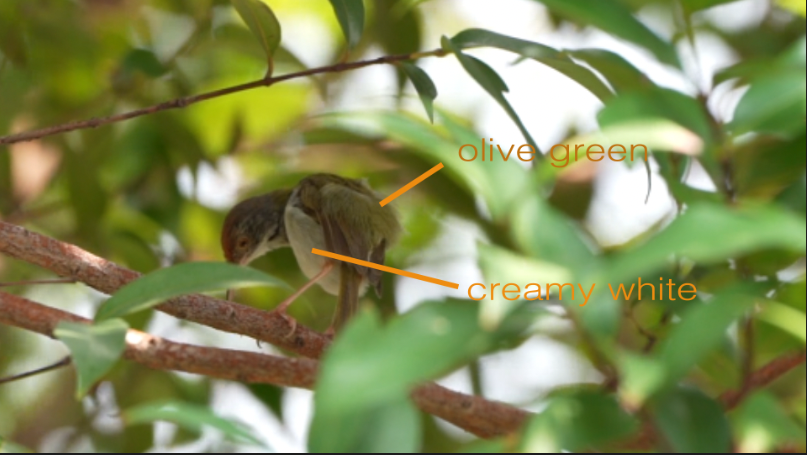
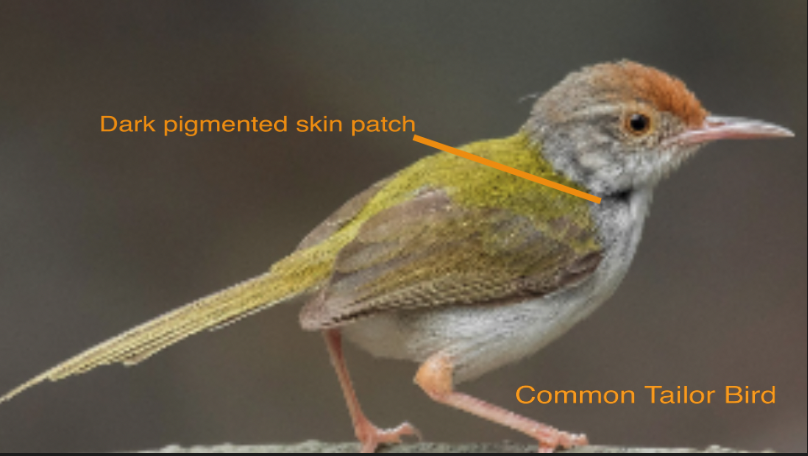
I know his species well as it had once built the most amazing nest in my garden. It's a tailor bird, the Orthotomus. But is it the dark necked tailor bird, atrogularis - or the common tailor bird sutorius? It does look like he has a dark neck but the common tailor bird also has dark pigmented skin patches on the sides of the neck, which are visible when it calls.
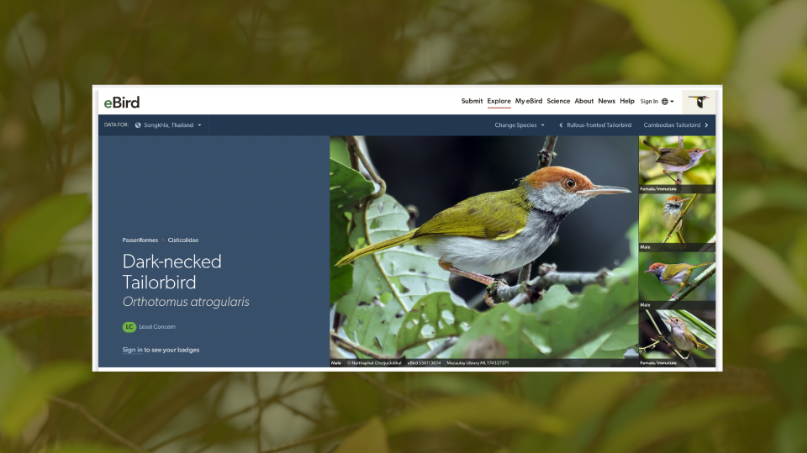
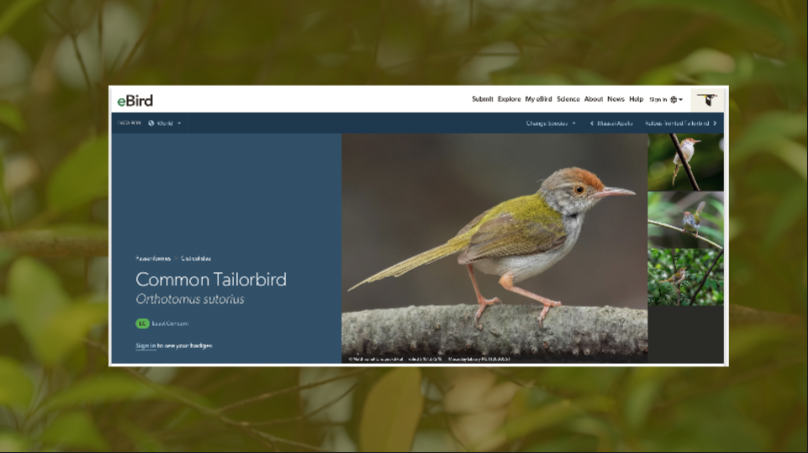
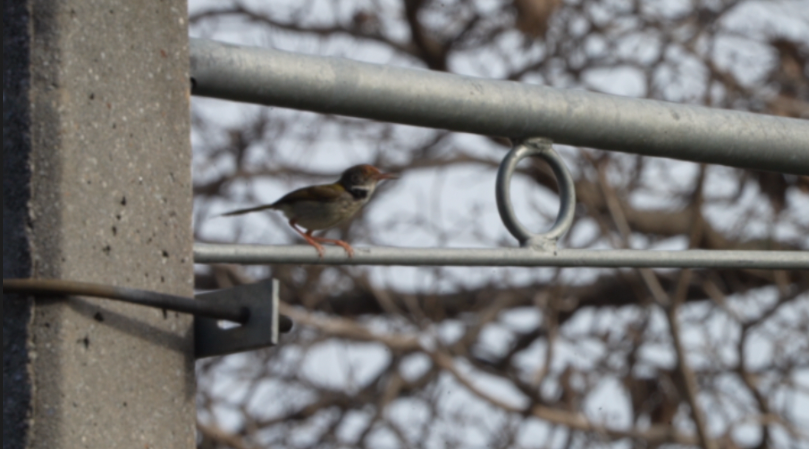
A better way to determine which species he is lies in the absence or presence of a yellow vent or what I like to call - the yellow butt. A bird's vent is the single external opening- also known as the cloaca, located at the base of the tail, typically hidden beneath the feathers and is used for expelling waste , mating, and laying eggs.
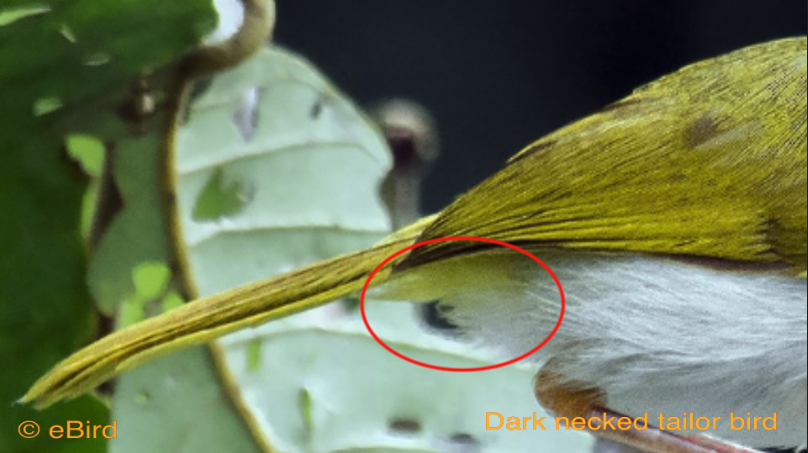
The Dark necked Tailor Bird has a yellow vent while the Common does not. So does our little one have it? Nope! Looks like he’s a Common tailor bird.
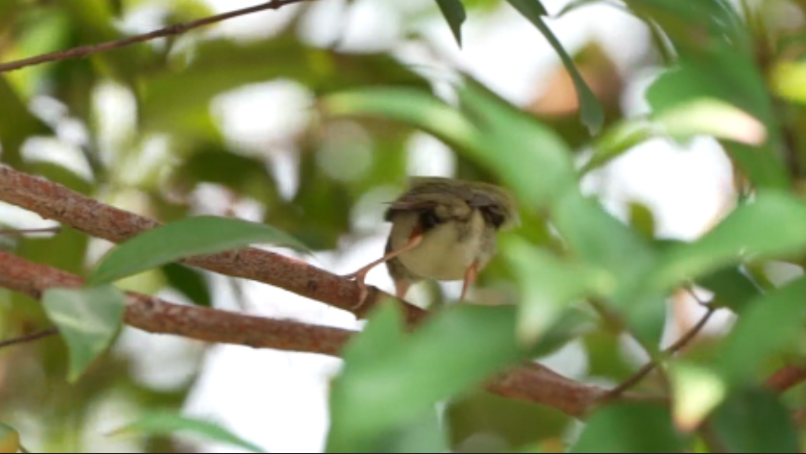
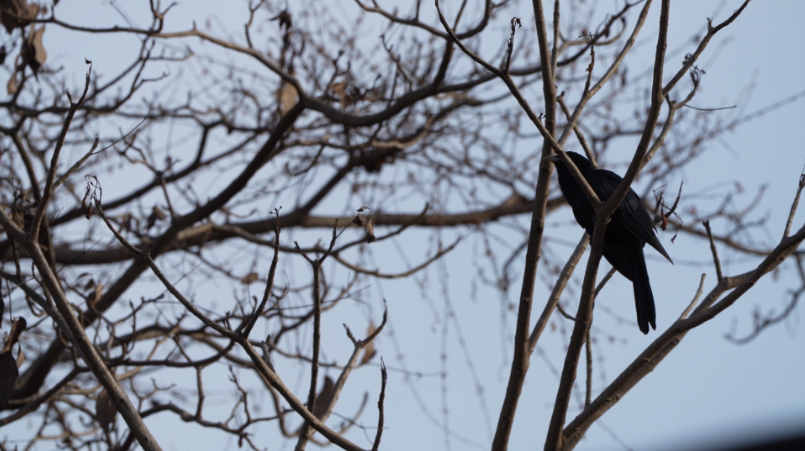
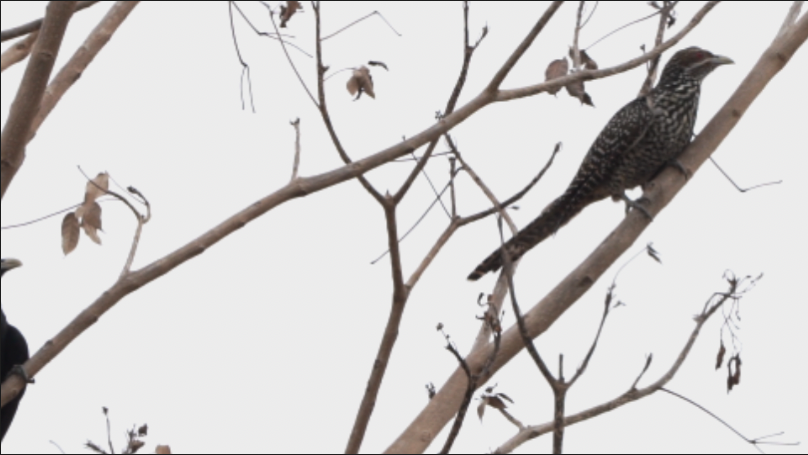
But is he really a ‘he’? How can we tell? Telling them apart is not that easy unlike in some other birds. The male Koel for instance is pure black and the female is brown and heavily spotted and streaked in white and rufous. Both sexes of tailor birds look almost identical although males grow longer central tail feathers during the breeding season.
The tailor bird is called a tailor because of the way it constructs its nest. It sews the edges of large leaves, in this case, my hydrangea leaves, by piercing and sewing it together usingplant fibres, fine grasses, caterpillar cocoons, silk from cobwebs and even threads borrowed from discarded human fabric or carpets. This forms a cavity orcradle in which the actual nest is built. This nest was a surprise find and located just a couple of feet off the ground while we were away, but no eggs were inside. Did the birds abandon this nest because it perceived our presence as a threat to it’s future family?
While some bird species deliberately build multiple fake nests to trick predators, a Common Tailorbird usually abandons a newly started nest due to material or construction accidents.
Building nests is a complex engineering process and construction failures are not uncommon. If the female pulls the fiber too hard, or if the leaf is too brittle, the edge of the leaf will tear open. Once a leaf splits, it can no longer support a secure pouch, causing her to abandon it. If the material it uses for thread snaps in mid-stitch and cannot be salvaged, she may cut her losses and move to a new leaf. However, it is interesting to note that when a tailorbird abandons a false start, she does not waste the energy she has already spent. She will often untie or pull out the fibers from the failed nest and recycle the material to start her next attempt elsewhere.
Tailor birds do not reuse old nests as they are constructed from living materials that grow and the nest’s shape would change or decay with time. It does however, maintain fidelity to the same bush or nest in the same area.
By the way, In Malaysia, they are also known as perenjak pisang (banana in Malay), because it frequently builds its nest within the large, folded-over leaves of the banana plant.
The tailorbird is usually loud—sometimes sounding like a car alarm—but it’s hardly making a sound now. Instead, he’s busy drying his wet feathers and preening. It appears he has fallen from one branch onto another, and drying off in this windy weather is tricky.
Because their flight is weak even in perfect conditions, tailorbirds instinctually avoid flying in heavy rain, hiding deep within dense vegetation to stay dry. Weighing a mere 6 to 10 grams, water can easily add to this weight and drag the bird down. Wet feathers lose their tight structure, becoming heavy and matted, making it impossible to generate the necessary thrust or lift. A completely soaked bird is effectively grounded until its feathers are dry. The rain was too light to soak this bird though.
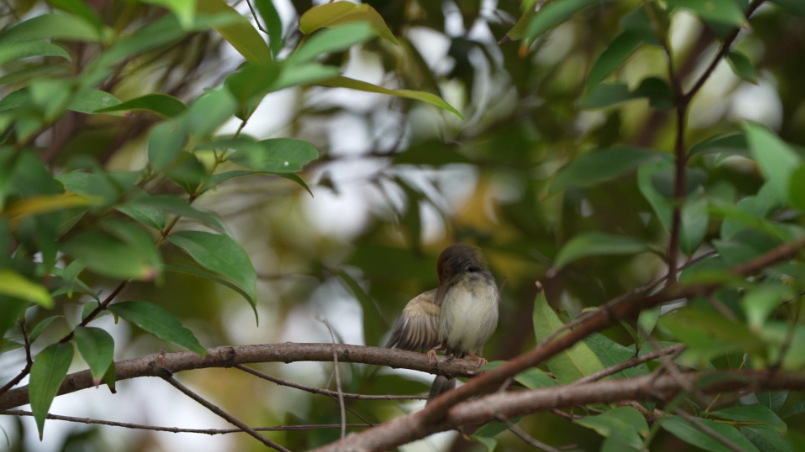
But it did give him a natural rinse. The combination of water and preening loosens and clears away accumulated dirt, dust, and parasites.
To dry off, he shakes and spreads his feathers to shed excess water, using highly flexible body movements to reach every part of his body. Raindrops cause feather fibers to separate, so he runs individual feathers through his beak to "zip" them back together, maintaining a perfect aerodynamic shape. His bill strokes, pulls, and nibbles the feathers from base to tip. He stretches his wings outward and raises his tail feathers to comb through harder-to-reach areas, and for the top of his head, he uses his feet to scratch and groom—a movement that looks just like a cat scratching its ear.He reaches back to the base of his tail, using his beak to stimulate his preen gland and gathers the specialized oil stored there - preen oil, and coats his plumage, preserving the feathers so the interlocking fibers can restore their natural waterproofing and insulation.
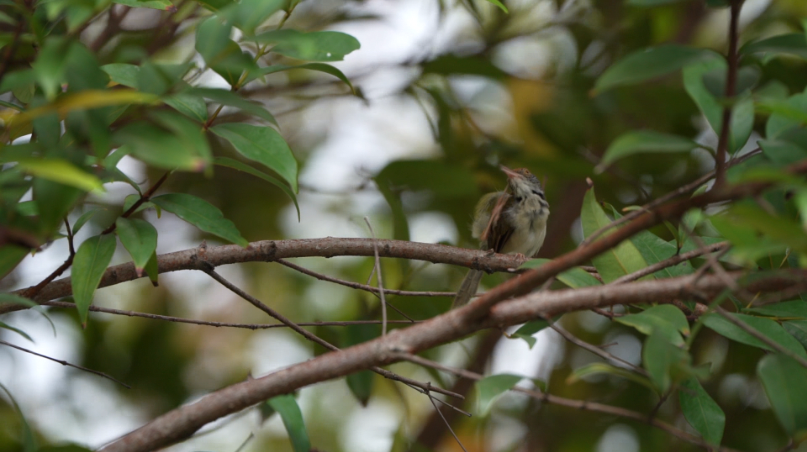
Finally, he uses his beak to coat the feathers in preen oil, which he gets from , which preserves the plumage and allows the interlocking fibers to restore their natural waterproofing and insulation.
Once he's done, he’ll be right back to being his active, energetic, and loud self.