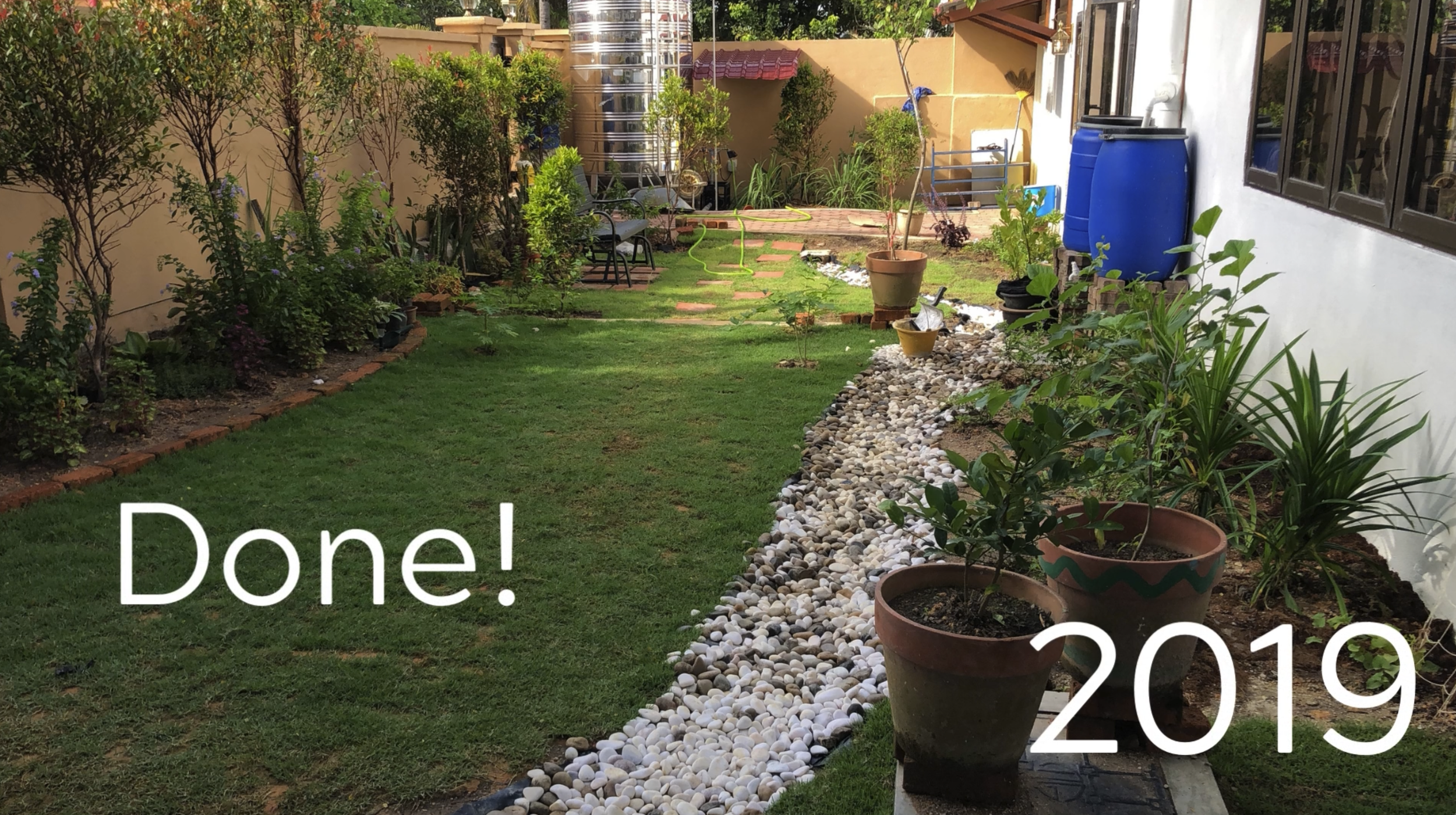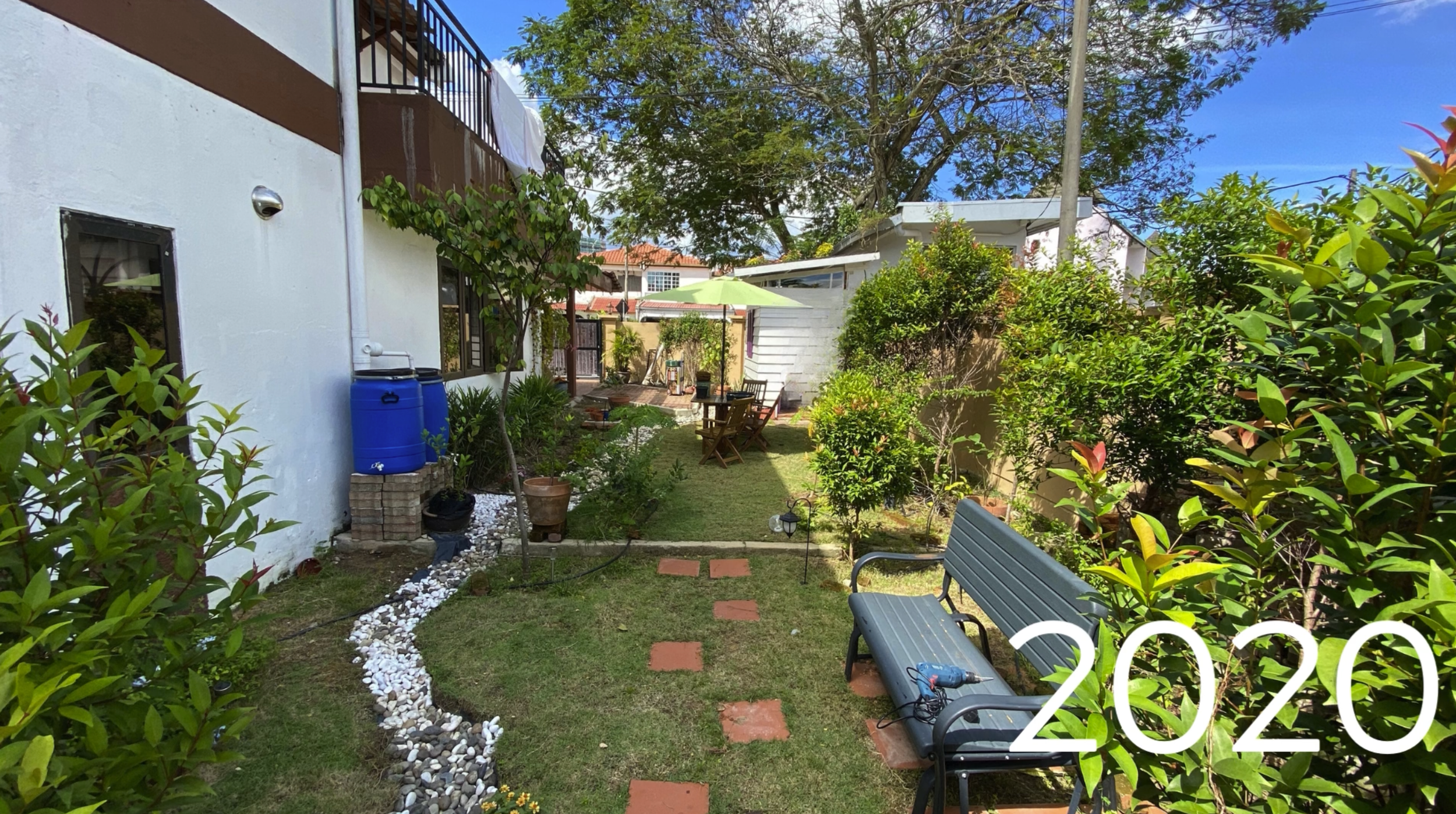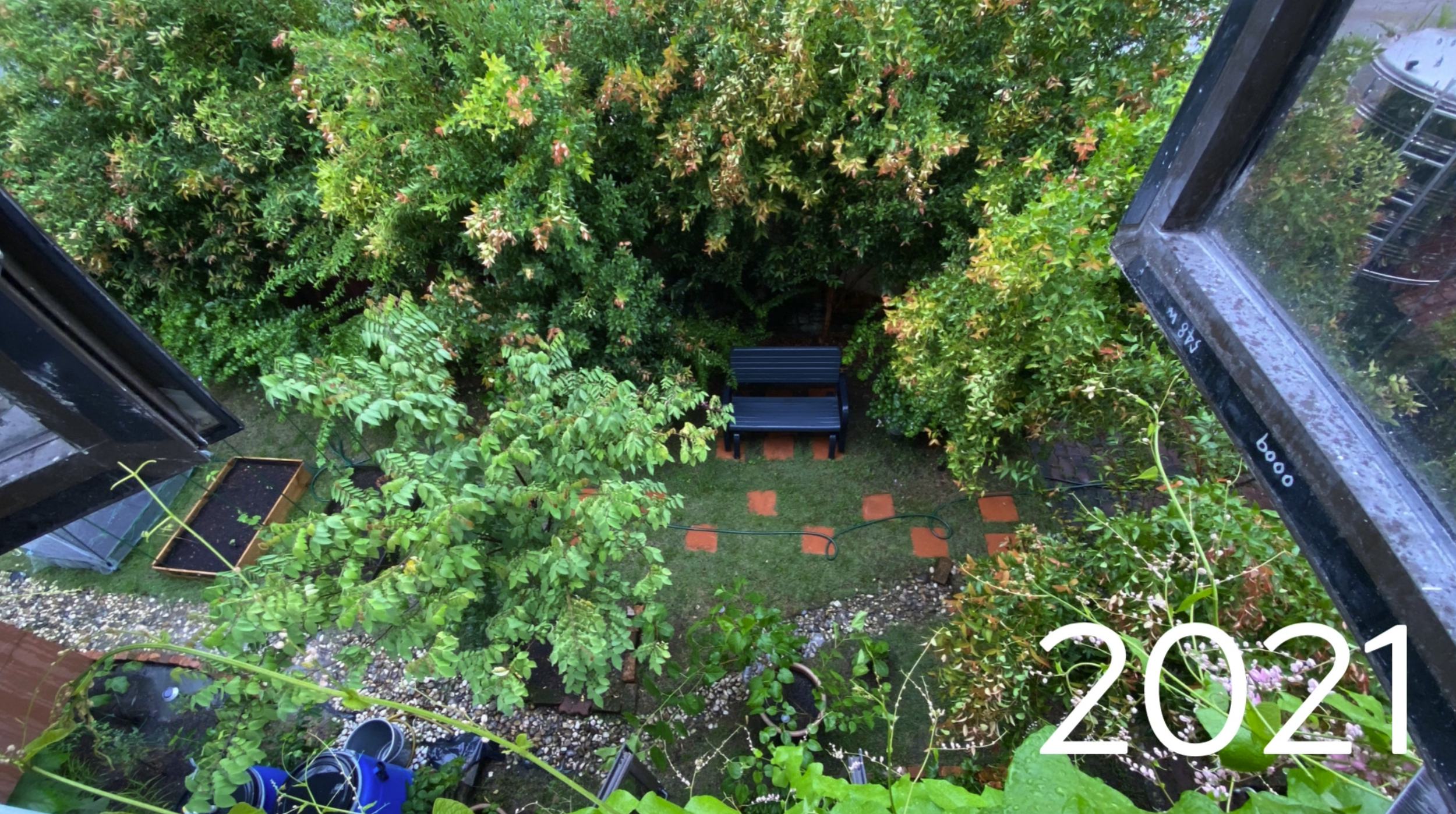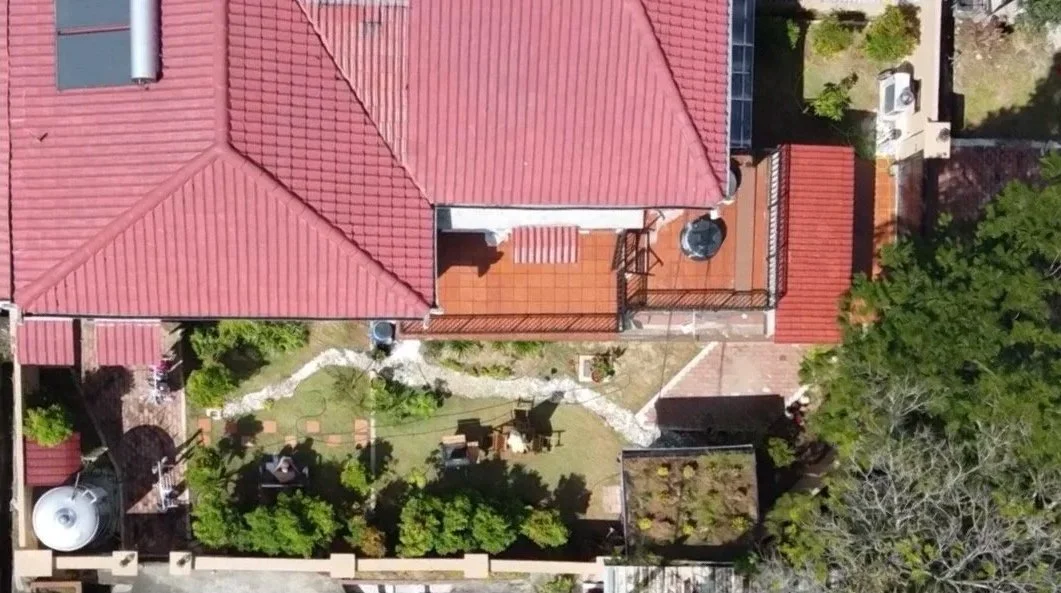
We had a flood problem
The Dry River Solution
Like its name, a dry river is a river that stays dry and flows only during heavy rain. In an urban garden, it helps to drain water out of your garden but looks way better than having a typical drain pipe.
So how did we do it?
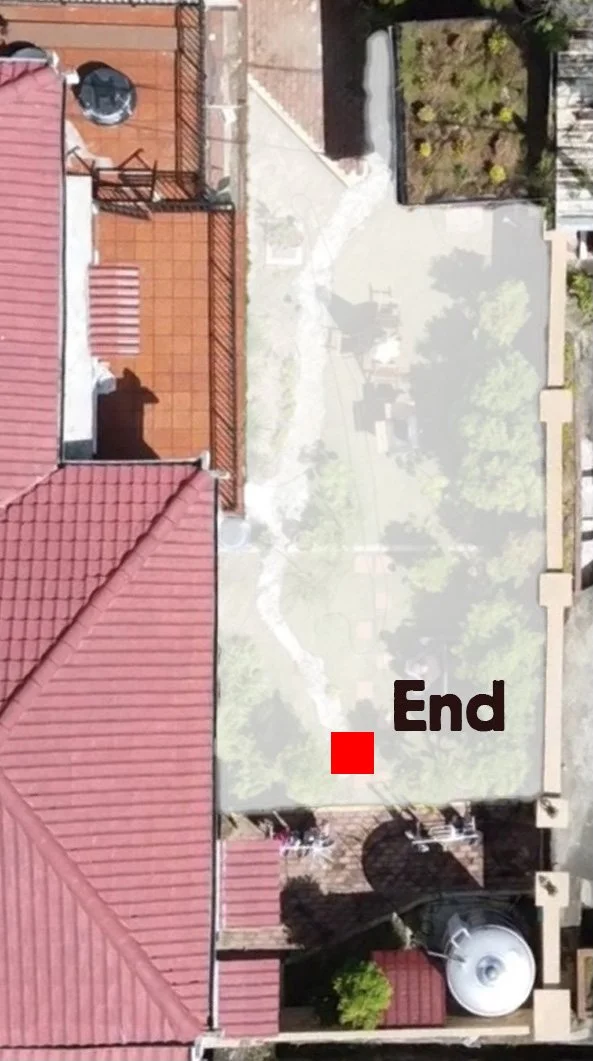
The first thing was deciding the layout, especially the end, because where it ends is where I would need to put my drainage pipe that would lead all that water out into the main drains.
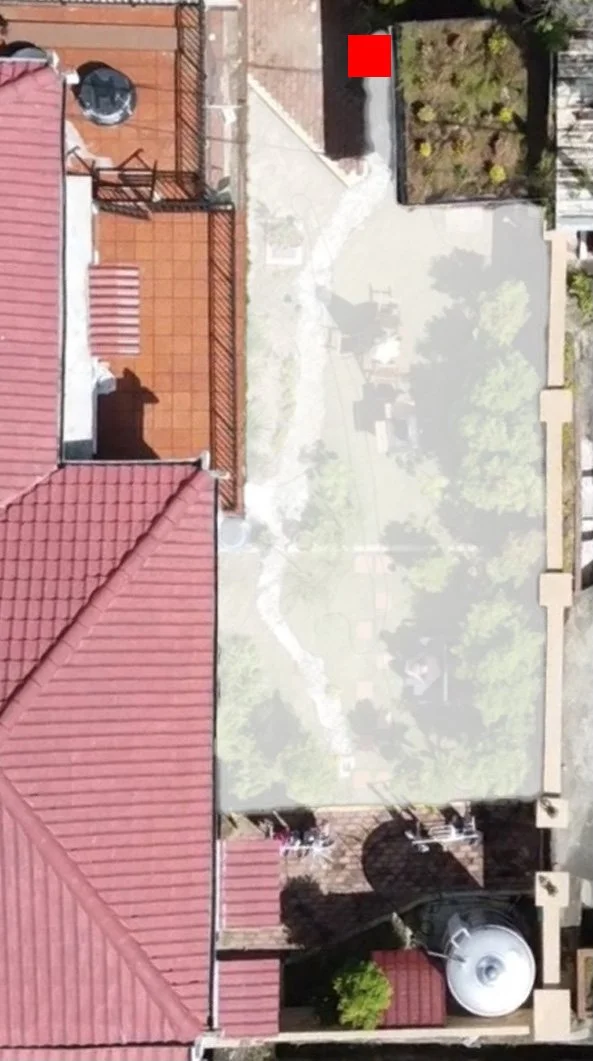
I then placed the starting point at the opposite end of the garden right here. The starting is also a place that has water puddling up from the roof garden.
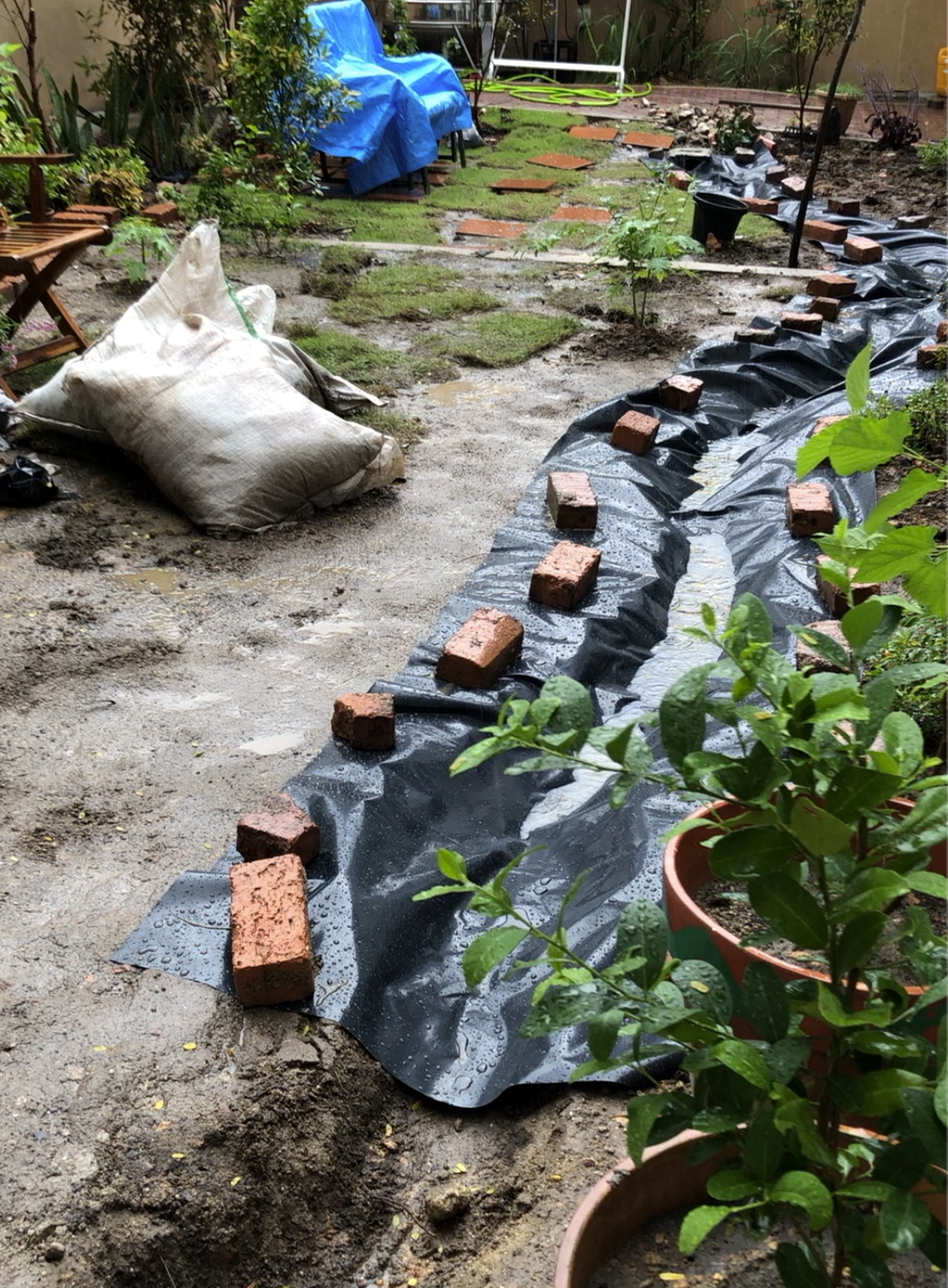
I made sure to remove any sharp rocks or roots and anything else that might puncture my pond liner. Then I placed a pond liner along the channel and put weights on it so it wouldn't fly off from the wind. I didn’t use one continuous liner. Instead I placed the liner closer to the start on top of the exit side so that the water flowed over it.
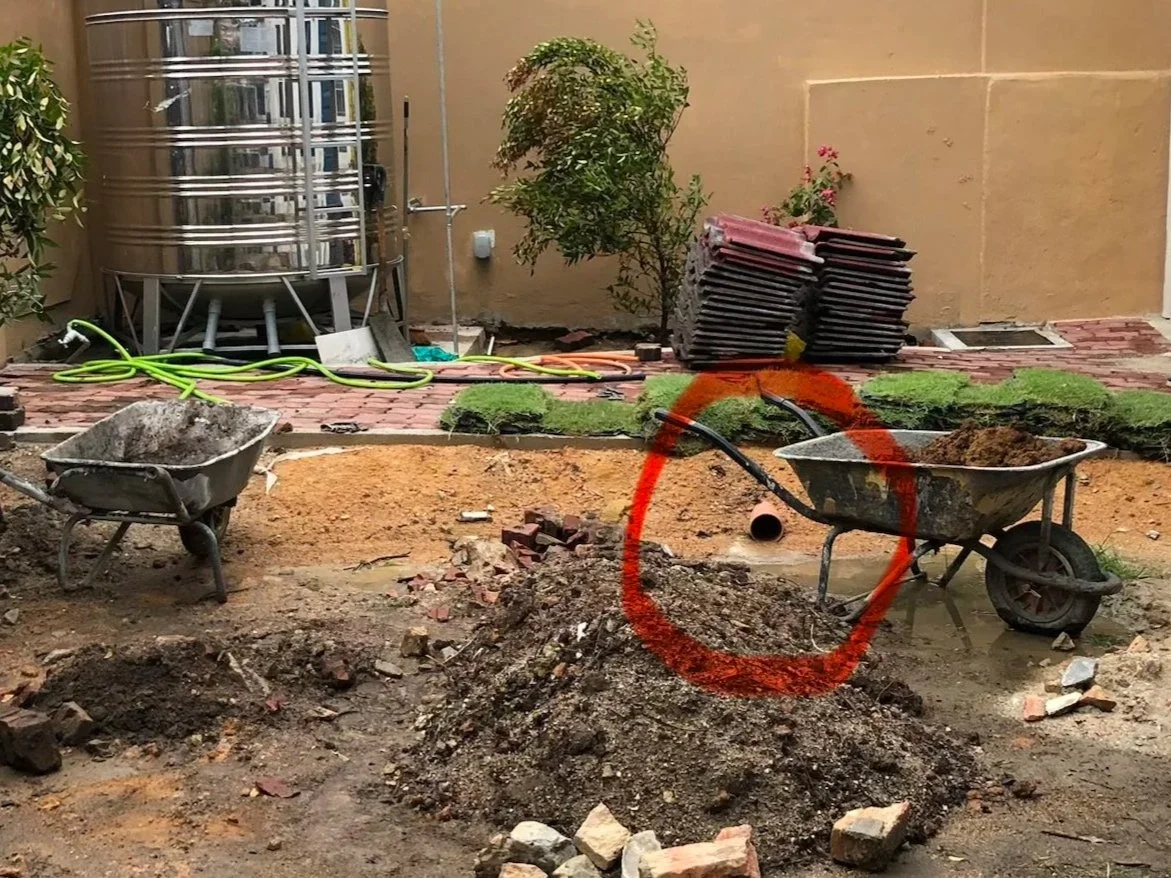
The drainage pipe is set below the ground level to help water flow out.
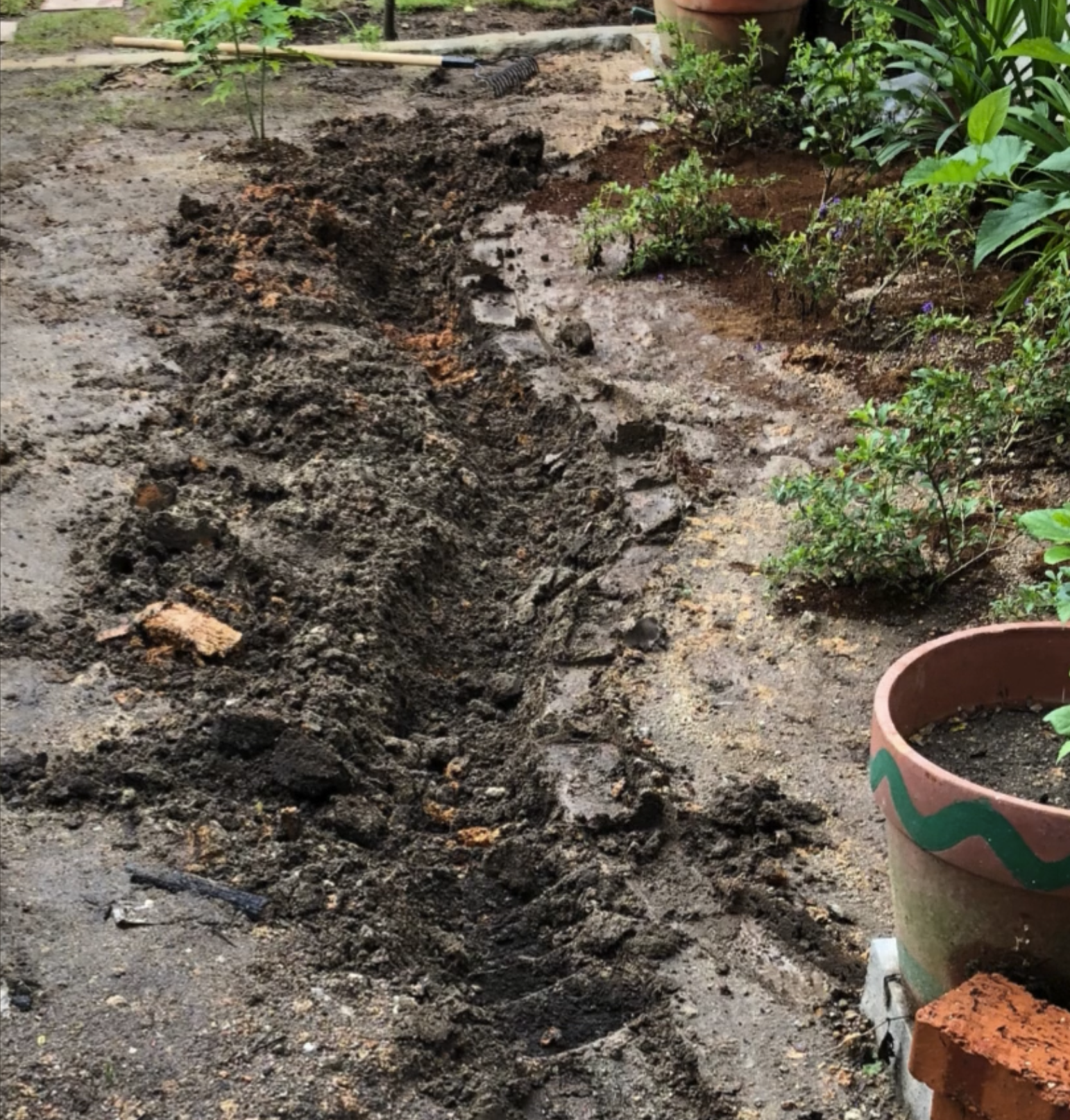
Once the layout was set, I started digging a small shallow channel about 50 cm wide sloping downwards towards the exit pipe to allow rainwater to flow naturally by gravity. I used a water leveler to check from time to time.
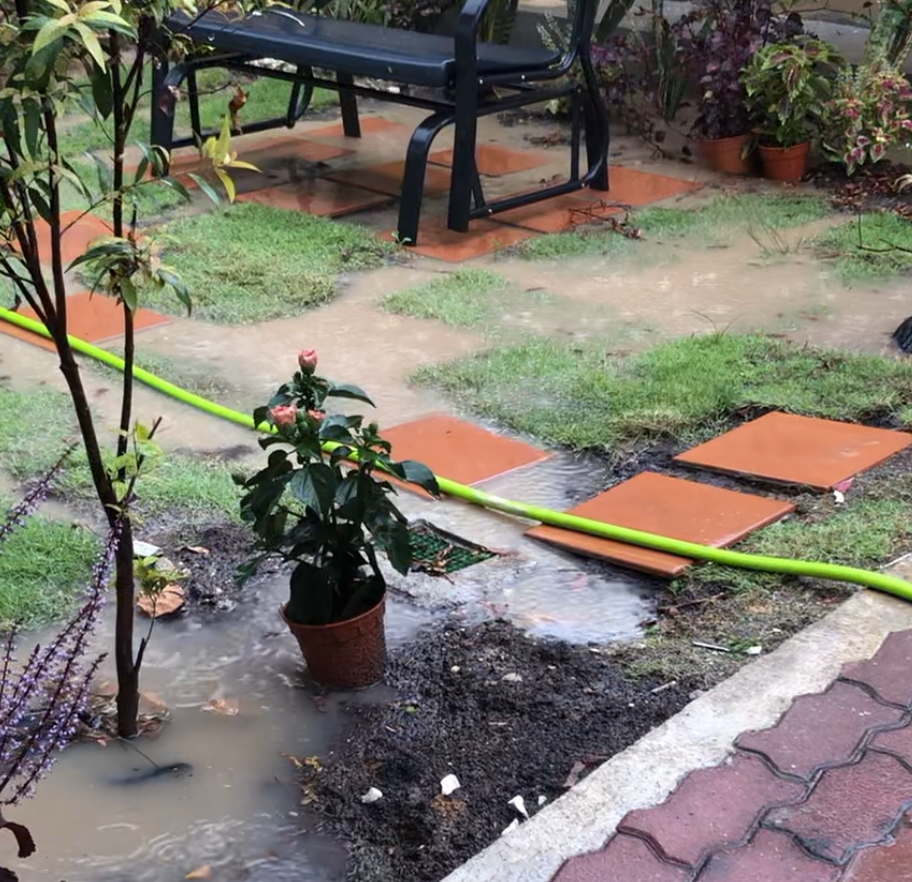
If the entrance drainage pipe is at the same level or above the ground, water will only flow out after the garden has flooded.
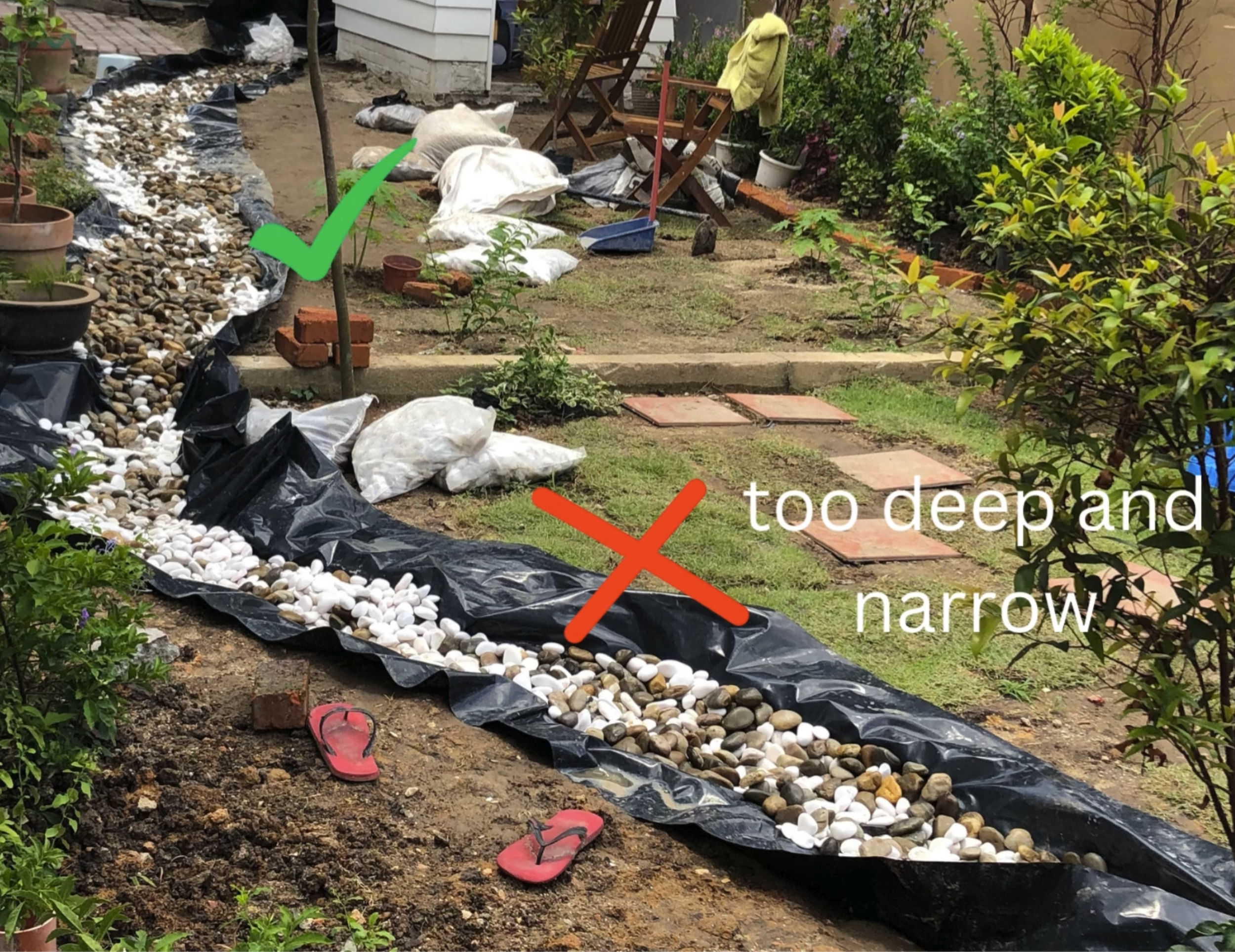
A wider, shallower channel looks nicer and functions better than a deeper narrower one.
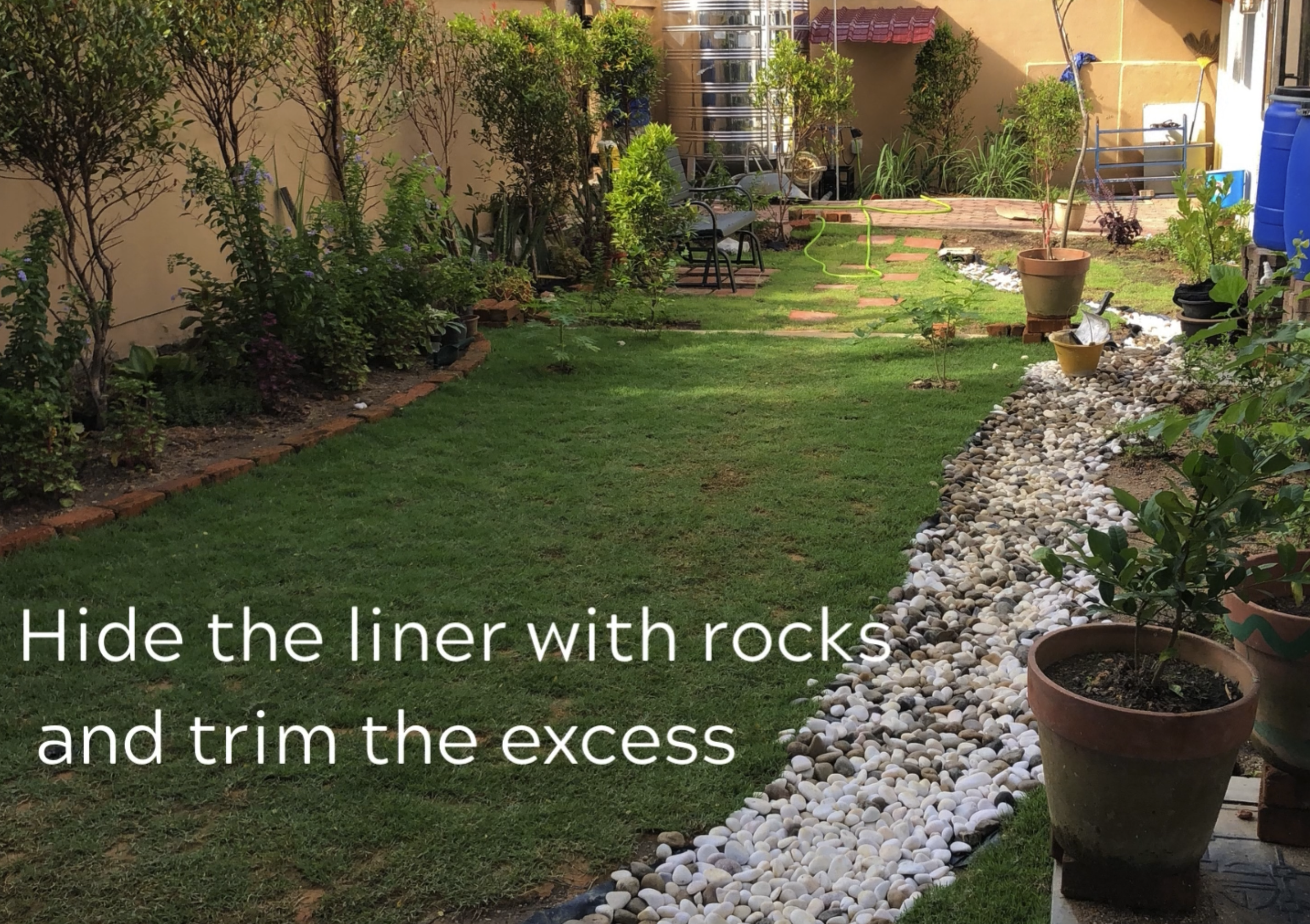
The liner is in place and now it’s time to test it. I waited for the rain and then looked for places where the water was flowing off onto the sides and not towards the exit pipe and made the necessary adjustments. Once it was all good, I added the pebbles and cut the excess liner and voila, my dry river is ready!